
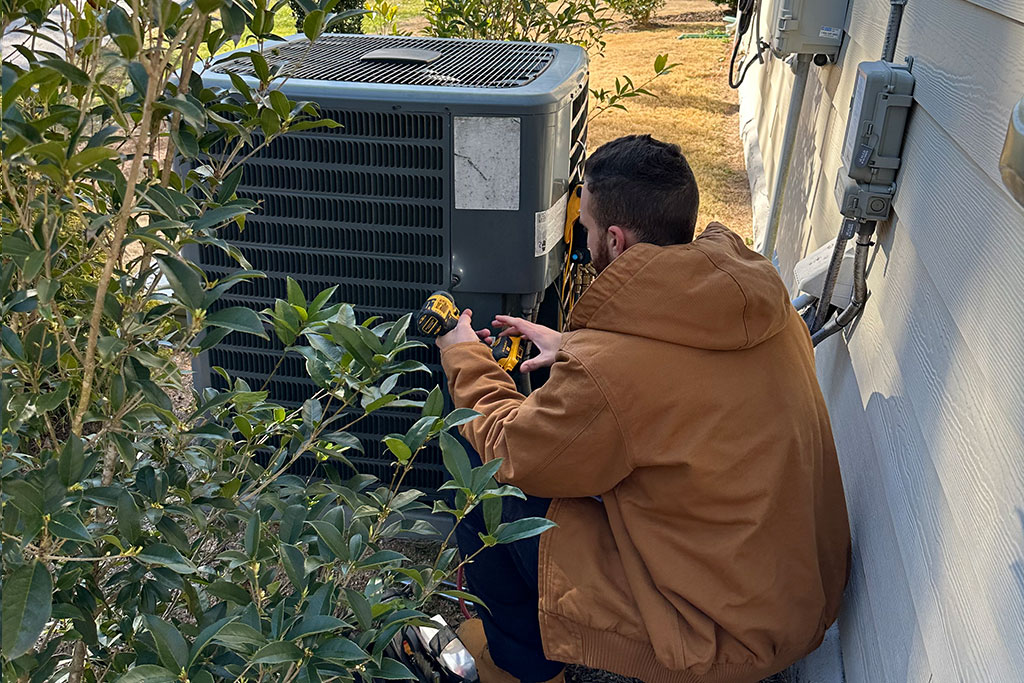
Heating System Repair Raleigh NC
As winter’s chill sets in, the heart of your home is undoubtedly its heating system. Whether it’s the soothing warmth of a heat pump or a furnace, Triangle Backflow, Heating & Air is here to guide you through the diverse world of heat systems, ensuring your space remains a haven of coziness.
Types of Heat Systems:
Forced Air Furnaces:
- How They Work: Utilizing a blower fan, forced air furnaces distribute heated air through ductwork, providing quick and consistent warmth.
- Benefits: Rapid heating, compatibility with central air conditioning, and options for energy-efficient models.
Heat Pumps:
- How They Work: Heat pumps transfer heat between the indoor and outdoor air, providing both heating and cooling capabilities.
- Benefits: Energy-efficient, eco-friendly, and suitable for moderate climates.
Electric Space Heaters:
- How They Work: Portable devices that convert electrical energy into heat, warming specific areas.
- Benefits: Cost-effective for targeted heating, easy to install, and ideal for supplemental heating.
Factors to Consider:
Energy Efficiency:
- Consider the energy efficiency of different heat systems, as it impacts both environmental sustainability and long-term cost savings.
Home Size and Layout:
- The size and layout of your home influence the choice of a heat system. Larger homes may benefit from forced air furnaces, while radiant floor heating suits diverse layouts.
Budget and Installation Costs:
- Assess your budget for both the initial heating system installation in Raleigh NC and ongoing operational costs. Different systems have varying upfront expenses and operational efficiencies.
Climate Considerations:
- Your local climate plays a role in choosing the right heat system. For instance, heat pumps are efficient in moderate climates, while boilers excel in colder regions.
Maintenance Requirements:
- Understand the maintenance needs of each system. Some require regular filter changes, while others may need periodic checks of complex components.
At Triangle Backflow, Heating & Air, we believe in transforming your living space into a warm haven where comfort knows no bounds. Contact us today at Contact us to embark on a journey towards the perfect heat system for your home. Embrace the warmth, embrace the comfort!
The Crucial Role of a Heating System in Raleigh, NC
When the chill of winter settles over Raleigh, NC, a reliable heating system isn’t just a luxury; it’s a necessity. But what happens when your heating system falters? That’s where Triangle Backflow, Heating & Air comes to the rescue. We’re your trusted partner for heating system repair in Raleigh, ensuring that your home remains a haven of warmth and comfort.
Our Process of Heating System Installation in Raleigh, NC
At Triangle Backflow, Heating & Air, we believe in making the installation process as seamless and stress-free as possible. Here’s a peek into our thorough and efficient approach to heating system installation in Raleigh, NC:
- Consultation and Assessment: Our journey begins with a detailed consultation. We take the time to understand your heating needs, evaluate your home’s layout, and recommend the most suitable heating system in Raleigh. Our expert technicians will answer your questions and provide honest, straightforward advice.
- Customized Solutions: Every home is different, and so are its heating requirements. We tailor our heating system installation in Raleigh to meet your specific needs. Whether you prefer a high-efficiency furnace, a heat pump, or a ductless mini-split system, we’ve got you covered.
- Professional Installation: Our skilled technicians handle the installation with precision and care. We adhere to industry standards as well as safety protocols, which ensure your new heating system is installed correctly and efficiently. We respect your home and clean up after ourselves, leaving no trace of our work behind.
- System Testing and Fine-Tuning: Once the installation is complete, we thoroughly test your new heating system to ensure it’s operating at peak performance. We make any necessary adjustments and walk you through the system’s features and functions, ensuring you’re comfortable with its operation.
- Post-Installation Support: Our commitment to your comfort doesn’t end with the installation. We provide ongoing support as well as maintenance services to keep your heating system in the best condition. If you ever encounter an issue, our team is just a phone call away, ready to provide prompt and reliable heating system repair in Raleigh.
Advantages of Our Heating System Repair in Raleigh, NC
Like all mechanical systems, heating systems can experience wear and tear over time. When you need heating system repair in Raleigh, NC, Triangle Backflow, Heating & Air is here to help. Here are some of the advantages of choosing our repair services:
- Expert Technicians: Our technicians are experienced in diagnosing and repairing all heating systems. From minor fixes to major repairs, we have the expertise to get your system back up and running smoothly.
- Prompt Response: We recognize that a malfunctioning heating system can disrupt your comfort and daily routine. That’s why we prioritize prompt response times. When you call us for heating system repair, we’ll schedule a visit to assess and address the issue as soon as possible.
- Comprehensive Diagnostics: Our repair begins with a thorough diagnostic assessment. We identify the root cause of the problem and provide a clear explanation of the necessary repairs. We aim to fix the issue correctly the first time, thereby minimizing the risk of future breakdowns.
- Transparent Pricing: Before we begin any repair work, we’ll provide a detailed cost estimate. There are no hidden fees or surprises – just straightforward, fair pricing.
- Quality Parts and Workmanship: We use only top-quality parts and materials for our repairs, ensuring the reliability of your heating system in Raleigh, NC. Our workmanship is second to none, and we stand behind the quality of our repairs with a satisfaction guarantee.
Why Choose Triangle Backflow, Heating & Air for Heating System Installation or Repairs?
When it comes to heating system installation as well as repair, Triangle Backflow, Heating & Air is the name you can trust. Here are a few reasons why we stand out from the competition:
- Experience and Expertise: With years of experience in the industry, we have the knowledge and skills to handle all your heating needs. Our team stays up-to-date with the most recent advancements in heating technology, ensuring that we provide cutting-edge solutions for your home.
- Reliability and Trustworthiness: Inviting a service provider into your home requires trust. Triangle Backflow, Heating & Air is a reputable company with a proven reliability and track record of delivering outstanding results. You can count on us to treat your home with respect and care.
- Comprehensive Services: From heating system installation in Raleigh, NC, to repair and maintenance, we offer a full range of services to keep your home warm and comfortable. Whatever your heating needs, we have the expertise to meet them.
- Competitive Pricing: We believe quality heating services should be accessible and affordable. Our pricing is competitive, and we provide financing options to make investing in a new heating system or necessary repairs easier.
- Commitment to Quality: We deliver the highest quality workmanship and service. Whether it’s a new installation or a repair job, we take pride in our attention to detail and dedication to excellence.
At Triangle Backflow, Heating & Air, we’re more than just a heating service provider – we’re your partners in home comfort. Whether you need a new heating system installation or reliable heating system repair in Raleigh, NC, you can trust us.